Are you a care-experienced young person or a children's social worker in the UK?
🌱 💬 💫 🤖
Take part in an online one-to-one research session to help understand experiences, perceptions, and hopes on the use of AI in children’s social care.
🔍 What is this project?
In this research project, care-experienced young people and children's social workers are invited to take part in a individual one-to-one online session to share their experiences, thoughts, and ideas about the AI tools currently being adopted in children’s social care across the UK.
This research is carried out by Sara Salsinha, a researcher and digital product and service designer, as part of a Masters in Sociology of Childhood and Children's Rights at UCL. But, who's Sara?
In the session with Sara participants will explore topics like digital privacy and rights, what AIs and humans are good at (and maybe not so good), and reflect on how this may impact future experiences of caring and being in care.
↓ If you decide to take part, what will you do in this research project?
🚀 What is the aim?
As a researcher and designer of AI tools, Sara wants to understand the different perspectives of people involved in using AI in Children's Social Care.
🫶🏽 She aims to learn from those experiences to inspire the design of thoughtful AI tools and how these are integrated into the UK's Children's Social Care.
💫 Sara plans to write a final report for her master's at UCL based on this research's findings and share a summary with interested organisations and communities within social care and children's rights. She hopes to contribute to an intentionally positive impact on the lives of care-experienced young people in the UK by augmenting their voices.
🔍 What are the research activities?
One-to-one research sessions take place between May and August 2025. If you decide to take part, what will you do in this research project as a:
If you are a care-experienced young person, you’ll be invited for a 1 hour online one-to-one session with Sara, on Zoom, to hear your thoughts about AI in Children’s Social Care.
The minimum age for participation is 13 years old. To thank you for your help, after the session Sara will send you a ❤️ £10 Love2shop voucher ❤️.
So, what happens...
⭐️ Principles for taking part
The research runs from April to August 2025, but it only takes a couple of hours to participate, and you can choose a day and time that works best for you.
Whether you want to participate in this research is entirely up to you. It’s always good to discuss it with someone you trust, and you can ask Sara any questions.
You can choose to do/answer all or just some of the activities and questions, and you’ll be able to do it in your own time instead of in the online one-to-one session with Sara. You can also let Sara know of any topics you don’t want to discuss. There is no need to say why.
From participating in the research to how Sara makes notes, transcripts, or records the session, you decide what’s best for you and consent to it in advance.
Your contributions, consent, recordings, and transcripts can only be used in this research to create a report for Sara’s final project at UCL and share summary insights. Sara can only use your contact information to contact you about this research.
If at any point you decide you don’t want to participate in the research anymore, even after completing all the activities, you just need to let Sara know. She’ll delete all your contributions, notes, session transcripts, and recordings. All personal information will always be able to be completely deleted. However, information that does not contain identifiable details may be hard to separate from the research once Sara has started the final analysis. So, from this point onwards, she may be unable to delete them.
There are no negative consequences to you or anyone else if you decide not to take part.
Sara will do her best to make this research enjoyable and safe. She wants you to feel empowered and hopes to honour your contribution by inspiring a positive impact when AI is used within children’s social care. However, she recognises that sometimes talking about your experiences can bring up strong feelings and discomfort for you and her. Sara will check in with you regularly and take breaks or skip questions and activities.
Your contributions and what you say in the sessions will be just between you and Sara. However, if Sara thinks you or someone you know may be in danger, she may need to tell someone, like her supervisor or a helpline. She will discuss this with you in advance if it’s safe to do so.
↓ What if Sara is concerned that you or someone you know may be in danger?
To participate, you’ll need a computer or phone and access to the internet. You can contribute via email, the online forms Sara will share with you and the one-to-one online session. You can ask Sara anytime if you need support using any of the tools.
If it helps you, you can have someone you trust observing your one-to-one session.
Sara will remove all personal information (anonymise), like contacts, locations and names, from your contributions. This will happen within 2 or 3 weeks of obtaining them, and they will be stored in a secure online tool, Microsoft OneDrive, provided by UCL. If you allow the recording or transcribing of your online session, it will be securely stored on the video conferencing tool online storage, Zoom’s cloud, under Sara’s UCL Zoom account and deleted after the transcripts have been checked and anonymised.
Once Sara has delivered her final report and received her grade from the UCL examination board, she aims to share an overview of the research findings with you. Then, all your anonymised contributions, transcripts, contact information, and consent will be deleted (usually before the end of 2025).
With the contributions and information shared by all the participants in this research, Sara will write a final report and summary of findings, but it will not contain any personal information about you or others.
Only Sara (and your legal parent, carer, or guardian, if you need one) will know you are participating in the research and have your contact information. If you are between 13 and 15 years old, though your legal parent, carer or guardian has consented for you to participate in this research, they will not be able to see your contributions and transcripts unless you share them.
Sara’s research supervisor is Katy Sutcliffe, a professor at UCL. Katy helps Sara do this research as ethically and safely as possible. Still, they will not have access to any personal information about you. Katy will be able to access anonymised participant contributions and transcripts to help Sara make sense of findings and ensure they’re treated fairly.
If you decide to participate in this research, Sara will collect different types of information from you. Because the research is done in the UK and at University College London (UCL), UCL looks after the personal information you give Sara. You are protected by the UK information (data) protection regulation, which is the law that protects everyone’s personal information in the UK. Sara will follow the advice from the UK ICO’s guidelines and the UCL General Research Participant Privacy Notice.
↓ What information will be collected, and how will it be handled?
↓ What tools will be used, and how will they handle your information?
👀 Good to know
If you decide to participate in this research, Sara will collect different types of information from you. Because the research is done in the UK and at University College London (UCL), UCL looks after the personal information you give Sara. You are protected by the UK information (data) protection regulation, which is the law that protects everyone’s personal information in the UK. Sara will follow the regulation through advice from the UK ICO’s guidelines and the UCL General Research Participant Privacy Notice.
Your personal information rights
You have rights about your personal information and how it’s handled by others: Individual rights; and there are additional rights for Children and Young People, such as:
- higher privacy measures by default;
- no tracking, such as what you do online or your location;
- and being provided with information that is clearly written and understandable.
Here’s an overview of what information Sara will collect and how it will be handled and used:
1. Identity and contact
For you to take part in this research, Sara will need your:
- Name (first and last);
- Email address (that she can use to contact you);
- Age range:
- For young people either ‘13 to 15’ or ‘16 to 19’ years old;
- For social workers or parents, carers and guardians ‘18 and over’;
- Additionally, for young people 13 to 15 years old:
- Name of parent, carer or guardian;
- Email address of parent, carer or guardian;
This information will be stored on UCL OneDrive, a secure online system for keeping documents, and you will either email Sara on her UCL email or use a Microsoft Form to pass this information to Sara.
Only Sara will have access to your identity and contact. Sara can only use this information to contact you about this research. Identity and contact information, including your consent, will be deleted once Sara receives her grade from UCL’s examination board (usually before the end of 2025).
2. Recordings of audio and screen sharing
If you agree to take part in the one-to-one online session, Sara will ask if you are okay with the audio and screen share of the meeting being recorded.
These recordings will be stored and encrypted on Zoom’s cloud under Sara’s UCL Zoom account. Only Sara will have access to these recordings.
Recordings will be deleted 2 or 3 weeks after your session once Sara checks all anonymised transcripts are accurate and documented through anonymised screenshots and short video clips of the screen share.
3. Contributions, notes and transcripts
The transcript of your session and all your contributions to this research, such as your definition of AI and any written/drawn feedback or ideas, will be anonymised and stored on UCL OneDrive. You will send your contributions to Sara through a Microsoft Form or her UCL email. If you consent, an automatic transcript will be generated during your session. You will access these for two weeks after Sara shares them with you through a password-protected link.
Only Sara and her supervisor, Katy Sutcliffe, will have access to your anonymous contributions, notes, and transcripts, which can only be used for this research. Sara will request consent from you for any other use.
Sara will analyse and use the anonymised contributions, notes, and transcripts to write her final report for her UCL examination and a summary of the findings. The summary will be shared on the research website with participants, organisations in the field, and Sara’s networks and communities, such as LinkedIn, MyData4Children, Designing for Children’s Rights, and UX of EdTech.
Anonymised contributions, notes and transcripts will be deleted once Sara receives her grade from the UCL examination board (usually before the end of 2025).
Sara will let you know when information has been deleted via email or the research website.
Sara will use different research tools: UCL email, UCL OneDrive, UCL Microsoft Forms, UCL Zoom, Miro, and Dovetail. These tools may handle the information stored in them slightly differently. Still, they have been chosen because they follow the UK’s personal information (data) protection regulations, and some have extra safety provided by UCL. See the UK ICO’s guidelines and the UCL General Research Participant Privacy Notice.
UCL tools: Microsoft Outlook, Microsoft OneDrive and Microsoft Forms
Your identity and contact information will only be handled through UCL-provided tools. You will communicate with Sara and send your contributions to her UCL email or through UCL Microsoft Forms. Contact information, anonymised contributions, notes and transcripts will be stored on UCL OneDrive.
Zoom
Zoom is the video conferencing tool you and Sara will use for your online one-to-one session. You will access the session through a personal link, and the meeting will be password-protected. You will not need to create an account, log in, or provide your real name to enter the session. If you consent, Sara will record the session’s audio and her screen share, and Zoom will produce an automatic transcript of what was said. Here is Zoom’s privacy statement.
Miro
Miro is an online whiteboard, where Sara will write the main questions and activities for the session. During your session, Sara will share her screen and write highlights of what you say. You will be able to see and give feedback on these notes in real-time, and you can make notes yourself, too, if you’d like. Here’s Miro’s privacy policy.
Dovetail
Dovetail is a tool that helps organise and make sense of research findings. Sara will upload the anonymised transcripts and use them to understand the themes, similarities, and details of what is being said in research sessions. With your consent, Sara will use Dovetail’s AI features, called Magic, to quickly create summaries, highlights, and themes of the sessions so she can get feedback on initial research findings from participants. Here’s the Dovetail privacy policy.
If you have feedback related to the research, you are welcome to contact:
- Sara Salsinha (the researcher) - sara.salsinha.22@ucl.ac.uk
- Katy Sutcliffe (the research supervisor) - katy.sutcliffe@ucl.ac.uk
If you have concerns about how your information was handled in this research, the UCL Data Protection Officer provides oversight of UCL activities involving the processing of personal data and can be contacted at data-protection@ucl.ac.uk. Here’s more information about the help they can offer you.
You have rights in relation to how your personal data is collected and used. Firstly have a look through how your information is handled in this research and who has access to it:
↓ What information will be collected, and how will it be handled?
↓ What tools will be used, and how will they handle your information?
Please email Sara (sara.salsinha.22@ucl.ac.uk) to view what data this research project holds about you and to request that any data is updated or deleted.
↓ Do you have feedback about this research or concerns over how your data is handled?
You can take further steps to ensure your contributions are private and only viewed by Sara. For example:
- use the online forms provided;
- don’t sign in to Zoom and use a nickname instead;
- choose a private place for your session and use headphones.
Discuss with Sara (sara.salsinha.22@ucl.ac.uk), anytime, if you have any privacy concerns.
If, at any point, Sara is concerned about the wellbeing or safety of a participant, she will seek the advice of her supervisor and/or support helpline. Depending on the case, this could be Childline, YoungMinds, Samaritans or Papyrus, NSPCC, or the participant’s local authority.
Where it is safe to do so, the participant and their consenting parent, carer, or guardian, if they have one, will be informed, and Sara will discuss this with them beforehand. This is the only time when Sara may need to share a participant’s personal information with others.
Sara will write a final report as part of her dissertation at UCL. A summary of findings will be shared on the research website with participants, interested organisations, and Sara’s networks and communities, such as LinkedIn, MyData4Children, Designing for Children’s Rights, and UX of EdTech.
👍🏿 Interested in taking part?
If you interested in taking part sign up here.
If you have any questions email sara.salsinha.22@ucl.ac.uk.
👩🏻💻 Who’s Sara?
Sara is an independent designer and researcher with a background in Interaction and Human-Centred Design and a foreground in Sociology of Childhood and Children’s Rights, helping organisations discover opportunities for new or improved tech-enabled products and services.
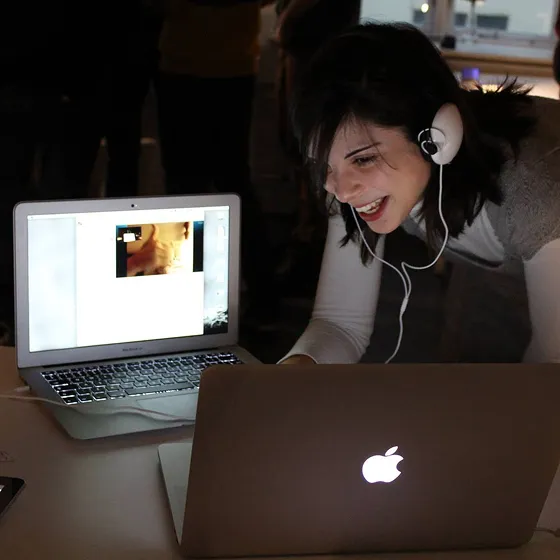
Sara is undertaking an MA in Sociology of Childhood and Children’s Rights at UCL, focused on the relationship between children and young people and emerging technologies.
Founded Therewith, a solo studio exploring technologies that make or help to make automated decisions on behalf of children and young people. Because young people should have a say over the technologies that will radically shape the society in which they live.
Sara has led the discovery of new digital services and improvement of existing ones for various organisations, including the Centre for Ageing Better, Sentencing Council, NHS, Google, IKEA, Meta, Barclays, Wise, and UNOPS, as part of the teams at:
⇾ Nesta - Design and Technology
⇾ The Behavioural Insights Team
⇾ Normally.com
⇾ BBC